
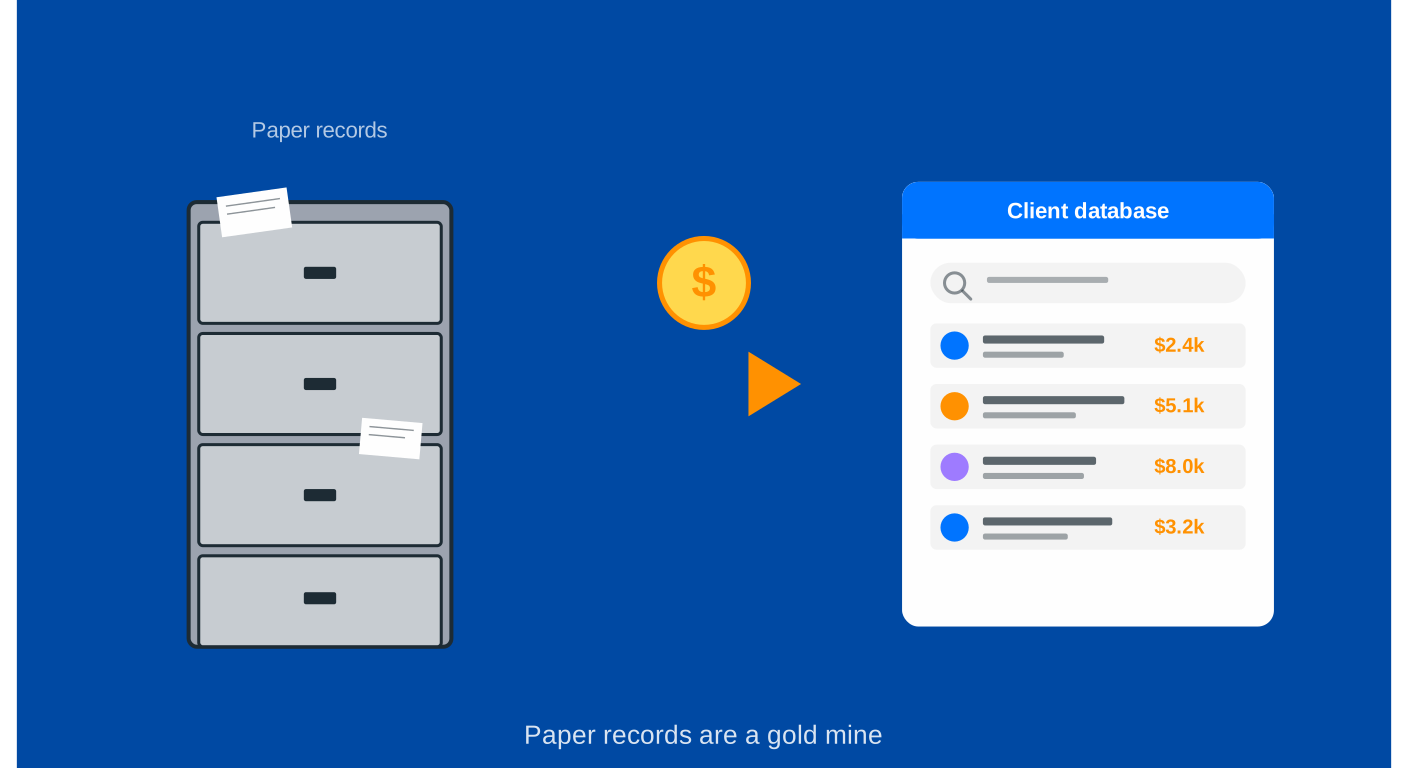
The customer list you already have is the easiest place to find your next job, and it’s sitting in a drawer you never open. The deck you built three summers ago is due for a re-stain, and that homeowner has no idea you’d come back for it.
Picture your filing cabinet. Every job you’ve ever done, every client, every quote and change order and “remember to follow up in spring,” it’s all in there. Along with a good chunk of it that never made it to paper at all, and lives only in your head. It feels organized, sort of. It also means you are the only person who can find anything, and the business grinds when you’re not the one looking.
That’s the real cost: the whole thing depends on you remembering. When your records, and half your process, live in a drawer and in your memory, nothing runs without you. You can’t hand work off, you can’t step back, and every busy stretch feels like it’s one dropped ball from a problem. Digitizing your client files isn’t about scanning paper for its own sake. For a trades business, it’s about getting the work out of your head and the drawer so it can run when you’re not standing over it.
Let me show you what it’s costing you.
The Hidden Costs of Paper Records
Cost #1: The work you can’t see
Take Marcus, an electrician who’s been at it for years and does clean, code-tight work. Back in 2018 he did a full panel upgrade for a customer. That customer has probably added an EV charger or a hot tub since, the smoke-detector interconnect he installed is coming up on its battery life, and the panel is due for a look.
But Marcus doesn’t know that, because he can’t search a file cabinet for “panel work from 6-8 years ago” or “customers who’ve likely added load.” He’d have to pull every folder and read it. So he doesn’t. And the customer doesn’t think to call, because an electrical panel isn’t top of mind until something trips. He’s probably using whoever showed up on Google last.
Multiply that by every past customer in that cabinet who needs something Marcus does but isn’t getting it. That’s not just lost work. That’s customers whose homes aren’t as safe or as finished as they could be, which is the opposite of why Marcus got into the trade.
Cost #2: The time you waste looking things up
A customer calls with a question about a job you did. You have to remember their last name, walk to the cabinet, find the right drawer, flip through folders, pull the file, find the detail, and get back on the phone. Three to five minutes, minimum. Times how many calls a week?
If Marcus takes 20 customer calls a week, that’s 60 to 100 minutes just finding information he already has. Every single week. Call it 50 to 80 hours a year walking to a filing cabinet.
Cost #3: The information you can’t analyze
Marcus gets customers from referrals, from his website, from a couple of networking groups. But he doesn’t actually know which source brings his best jobs, because you can’t run that analysis on paper. He can’t segment by:
- Which services are most profitable
- Which referral sources bring the best customers
- Which customers are due for a maintenance visit or inspection
- Who hasn’t called in two or more years
- Which marketing actually worked
All of it exists. It’s in the cabinet, locked in paper, useless for making a decision.
Cost #4: The risk of loss
What happens with a fire, a flood, a burst pipe, or coffee in the wrong drawer? Paper has no backup. You hope you photocopied everything and stored the copies somewhere else. (You didn’t.)
Cost #5: The inability to step back
As long as the customer information is on paper, only you can reach it. The day you want to hire someone to help with outreach, scheduling, or follow-up, you can’t, because the knowledge is locked in files only you can physically access. The business grows exactly as far as your own capacity to walk to that cabinet and back, and no further.
“But I’ll Digitize My Files Someday…”
No, you won’t. “Digitize the cabinet” feels like climbing a mountain in flip-flops. It’s huge, tedious, there’s no obvious starting point, and you have paying work to do. So it sits on the someday list forever, quietly costing you every week while you wait for a block of free time that never shows up.
The Fix: Make It Someone Else’s Job
I told Marcus, and I’m telling you: you don’t have to do this yourself.
Option 1: The Fiverr approach
Dana, a landscaper in the same conversation, uses Fiverr for basic data entry. She took a stack of business cards, photographed them ten to a page, and hired someone to type them into a spreadsheet for $25. For a cabinet project:
- Pull the files one drawer at a time
- Scan or photograph the key information (contact page, job summary, notes)
- Post a project: “Enter customer information from images into a spreadsheet template, 200 records”
- Cost: roughly $100-200, but note that sellers set their own prices
Before you hand anything over, remove or redact anything truly sensitive, like gate codes, alarm codes, or payment details. Names, addresses, job types, and service dates aren’t sensitive enough to stop you from getting help.
Option 2: Hire a college student
Summer’s coming and students need money. Post on a local college job board: “Part-time data entry, 15-20 hours total, $20/hour, flexible, can work from our office, NDA required.” Have them sign a simple non-disclosure agreement, give them one drawer at a time, and let them do the boring work while you do the work only you can do.
Option 3: Hand it to someone like me
If your records are complex, or you just want it done right without losing your evenings to it, that’s one of the things I help with. I’ll figure out what information actually matters and get your list organized and genuinely usable, instead of a digital version of the same drawer. It costs more than Fiverr. It’s also faster, more accurate, and you don’t end up staring at a spreadsheet wondering what to do with it, because getting it digitized is only the first step.
Digitizing Your Client Files Isn’t the Whole Job
Getting the files out of the cabinet and into a spreadsheet is real progress. It’s the hard part, and once it’s done your customer list finally lives somewhere you can use it instead of somewhere you have to dig through. But a spreadsheet just sits there. It won’t send a note to the customers due for a panel check, keep track of who you’ve already followed up with, show you at a glance who needs what, or nudge you when someone hasn’t heard from you in two years. That work still has to happen, and if it’s on you to remember, it slides right back into your head where it started.
So the real shift isn’t buying more software. It’s getting the reach-out to actually happen, consistently, without you being the one who has to sit down and do it. The digitized list is the start. Staying in front of those customers, month after month, is what turns a list of names into repeat work, and that’s the part you can hand off instead of carrying yourself.
The Real Return: Capacity, Not Just Cash
Let’s do the math on Marcus’s cabinet. Say he has 300 past customers in there. If he could easily spot the ones due for work and reach out to just 10%, that’s 30 conversations. If 20% of those book a job at an average of $1,500, that’s six jobs and $9,000 in work, from customers he already had, who already trust him, who just needed a reminder he exists.
But the bigger return isn’t the $9,000. It’s that once the information is in a system, someone other than you can run that outreach. You stop being the only person who can find anything, and you get the room to step back. The cabinet isn’t a “someday” project. It’s the thing standing between you and a business that runs without you standing over it.
Start Small, But Start Now
You don’t have to do the whole cabinet at once. Start with one drawer. Start with just the A’s. Get those 20 people into a system, see what you can do with the information, notice how much easier it is to stay in touch. Then do the B’s. You’re not building Rome. You’re getting your business out of a drawer and into somewhere it can actually help you run the place. The goal isn’t perfection. It’s progress.